

ARTHUR JAMES WARDEN
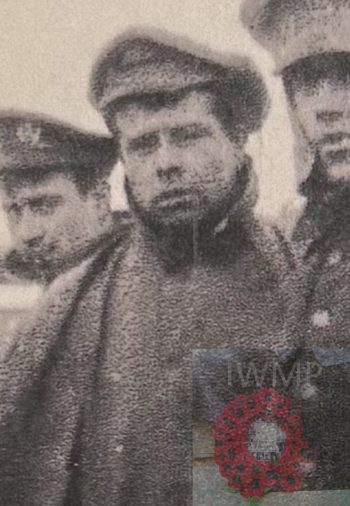
Photo courtesy of Poppy
Born: 18th September 1888, All Saints, Ipswich.
Died: 1st September 1915; age 27; KiA.
E.A.D.T. – Friday, 17th September 1915 – SUFFOLK SOLDIER KILLED – Mrs. Ellen Warden, of Handford Road, Ipswich, has received notification of the death of her husband, Lance Corporal Arthur Warden, of the 2nd York and Lancaster Regiment, who was killed in action in France on the 1st September.
Residence: Handford Road, Ipswich.
Occupation: with Ransomes, Sims & Jefferies, Orwell Works, Ipswich.
Enlistment Location: Ipswich.
Date of Entry Therein: 21st September 1914.
Rank: Lance Corporal; Service Number: 7995
Regiment: York & Lancaster Regiment, 2nd Battalion.
Medals Awarded: Victory, British War, 1914 Star & Clasp.
Grave Reference:
I.P.36.
La Brique Military Cemetery, No 2.
West-Vlaanderen,
Belgium.
CENSUS
1891 16, Beaconsfield Road, Ipswich.
Arthur was 2 years old and living with his parents & siblings.
Charles Warden, 30, a Bricklayer, born Ipswich.
Mary Ann Warden (nee Jacobs), 25, born Sproughton.
Ada Sarah Warden, 8, born Ipswich.
Charles John Warden, 17, born Ipswich.
Frederick William Warden, 16, born Ipswich.
Ernest Warden, 1, born Ipswich.
1901 2, Cranfield Cottages, Bramford Road, Ipswich.
Arthur was 13 years old and living with his parents, siblings & niece.
Charles, 42, a Bricklayer.
Mary, 37.
Ada, 19.
Charles, 17, a Bricklayer’s Labourer.
Frederick, 16, an Apprentice to a Bricklayer.
Ernest, 12.
Gertrude Elizabeth Warden, 9, born Ipswich.
Gladys Florence Warden, 2, born Ipswich.
Florence Mabel Warden, 5 months, born Ipswich.
1911 29, Victoria Street, Ipswich.
Arthur was 22 years old, a General Labourer. He was married and head of the household.
Ellen, 20.
Arthur’s father, Charles Warden, died by his own hand on Thursday, 30th May 1907 and was buried in Section M at Ipswich Old Cemetery.
Suffolk Chronicle and Mercury – Friday, 7th June 1907 – IPSWICH RIVER TRAGEDY – MAN’S BODY FOUND WITH HANDS AND FEET TIED – While passing the Chantry Locks, on the Gipping, at Ipswich, today (Thursday), a man named John Clarke, of Surbiton Road, Ipswich, espied a strange object, resembling the top part of a human head, in the river. A close inspection revealed the fact that the body of a man was in the water. John Clarke immediately procured assistance, and the body, which was in an upright position, was got ashore. It was found that the hands and legs respectively had been tied together with bootlaces. Inquiries show that the body is that of a bricklayer named Chas Warden, who was married and lived on Bramford Road. He had lately been working at Hintlesham. The body was removed by the police to the Wild Man Inn, Sproughton, to await the inquest.
Evening Star – Saturday, 1st June 1907 – DISTRESSING SUICIDE AT SPROUGHTON – IPSWICH BRICKLAYER’S DELUSIONS – The Suffolk County Coroner, held an inquest on Friday evening at the Wild Man Inn, Sproughton, on the body of Charles Warden, aged 47 years, a bricklayer, of Bramford Road, Ipswich, whose body was discovered in the river Gipping, near the Chantry Gates, on Thursday. Mrs. Mary Warden identified the body as being that of her husband. She last saw him alive on Thursday morning. He came home unexpectedly on Wednesday night. He had been at work at Hintlesham and generally came home on a Saturday afternoon, returning to Hintlesham on Monday morning. She asked him why he came home, and he replied, “To get out of the way of Mr. Baldry” (his employer). He remarked, “That man will turn my brain,” and sat and held his head for some time. In the morning, he told Mary that he would “leave £10 back” to finish the job, as he had worked hard, and did not see any prospect of getting anything out of it. According to the hours he had worked, he should have several pounds to take, but he did not think he would draw any money to speak of. He had lodged with Mr. Baldry since March, and complained that he had not had a hot meal since he had been there. He said that he had taken the work under price, and Mr. Baldry had “put extra work on” to him. He had been very depressed for the last six weeks, and complained continually of his head, expressing the opinion that his brain had turned. He went out that morning by the back door, which was most unusual. He was in no financial difficulty, and he had never threatened to “do away” with himself; on the contrary, he had often said he could not understand how a man in his right mind could take his own life. Up to the time of accepting this job, he had been of the brightest disposition. He had also complained of having little or no sleep of late. Her husband told her that Mr. Baldry refused to let him off the remainder of the work for £10, which amount, he said, he would be willing to forfeit if he could be relieved of the job.
Mr. Robert Baldry, carpenter and builder, of Hintlesham, deposed that Charles Warden undertook some work under him. He produced the agreement and also a letter from the deceased, stating his willingness to accept the work under the terms specified. He agreed to do the bricklayer’s work in connection with two cottages in the course of erection at Hintlesham. The deceased lodged with Robert Baldry and had exactly the same food as him; he had meat three times a day. Recently deceased came to witness and asked him to let him off finishing the job if he paid £10, as he had had an offer of regular work, wet or dry. Witness told him he could go if he got somebody else to finish it. He had been a very steady, hard-working man up to Whitsuntide, but since then, he had been very strange in his manner and had been irregular in his hours. On Monday, he appeared very distressed and walked about holding his head. They had never quarrelled, but Charles Warden had often said that all his money seemed to go in rent.
The widow, Mary Warden. Challenged the witness as to the truth of his assertion that the deceased had had the same food as himself, and the witness adhered to his statement.
Mr. J. Stollery, landlord of the Red Lion, Bramford Road, stated that he last saw Charles Warden and complained very much of his head. He said he had taken on a job which was no good to him, and asked the witness if he wanted £1 or so to get out of the work, would he let him have it? Witness said he would do what he could. He afterwards remarked that the only way out of it was “to make a hole in the water.”
John Clarke, a brickmaker of Bramford Road, stated that on Thursday morning, about 9:30, he was walking by the side of the Gipping, along the tow path, and when near the Chantry Lock, he saw the body of a man in the river, between the two lock gates. John Clarke obtained assistance and recovered the body. The wrists and feet were tied together. The wrists were tied with a string, and the lace of the left boot had been unlaced and wound round the right boot.
Dr. Hoyland, of Ipswich, said he had examined the body. There were no external marks of violence. Death was due to drowning. From what he had heard in the evidence as to the symptoms the deceased had complained of, he should say that his brain was very worried, and that he was suffering from a delusion that he was going to lose money at the work on which he was employed, which apparently was not the case. His complaining of sleeplessness and burning at the ears all pointed to his brain being disordered.
The Coroner, having carefully summed up the evidence, the Jury returned a verdict of “Suicide whilst of unsound mind.”
On Boxing Day, 1910, at All Saints Church, Ipswich, 22 year old (certificate reads 25 years) Arthur, a labourer, of 31, Riverside Road, Ipswich, married 20 year old Ellen Maud Lyas, born 1891, Ipswich – daughter of the late Robert Lyas, a bricklayer, and Annie Lyas (nee Burrows), and stepdaughter of William Henry Burrows, a telephone linesman, of 465, Bramford Road, Ipswich.
Ellen and Arthur had two daughters:
Ada Florence Gertrude Warden, born 20th January 1912, Ipswich and baptised on the 11th February 1912, at All Saints Church, Ipswich – family home at 29, Victoria Street, Ipswich.
Elizabeth Annie Rose Warden, born 4th November 1913, Ipswich.
Soldiers’ Effects to Ellen M. Warden – widow.
Arthur is also remembered on the Ransomes, Sims & Jefferies, Orwell Works, war memorial. Now sited at The Museum of East Anglian Life, Stowmarket, Suffolk.
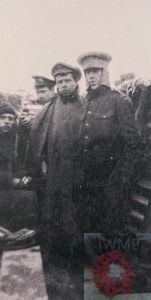
An officer from the York and Lancaster Regiment often associated with photography in the 2nd Battalion was Lieutenant Hugh William McCall (2nd Battalion). He served from the beginning of the war and was wounded, then later served on the Staff of the 60th Division being promoted to Major. While not a formal “official photographer,” many 2nd Battalion officers and soldiers, including officers like McCall, were known to keep private cameras in early 1914-1915, though this was later strictly forbidden to take photos of life in the trenches.
Leave a Reply