

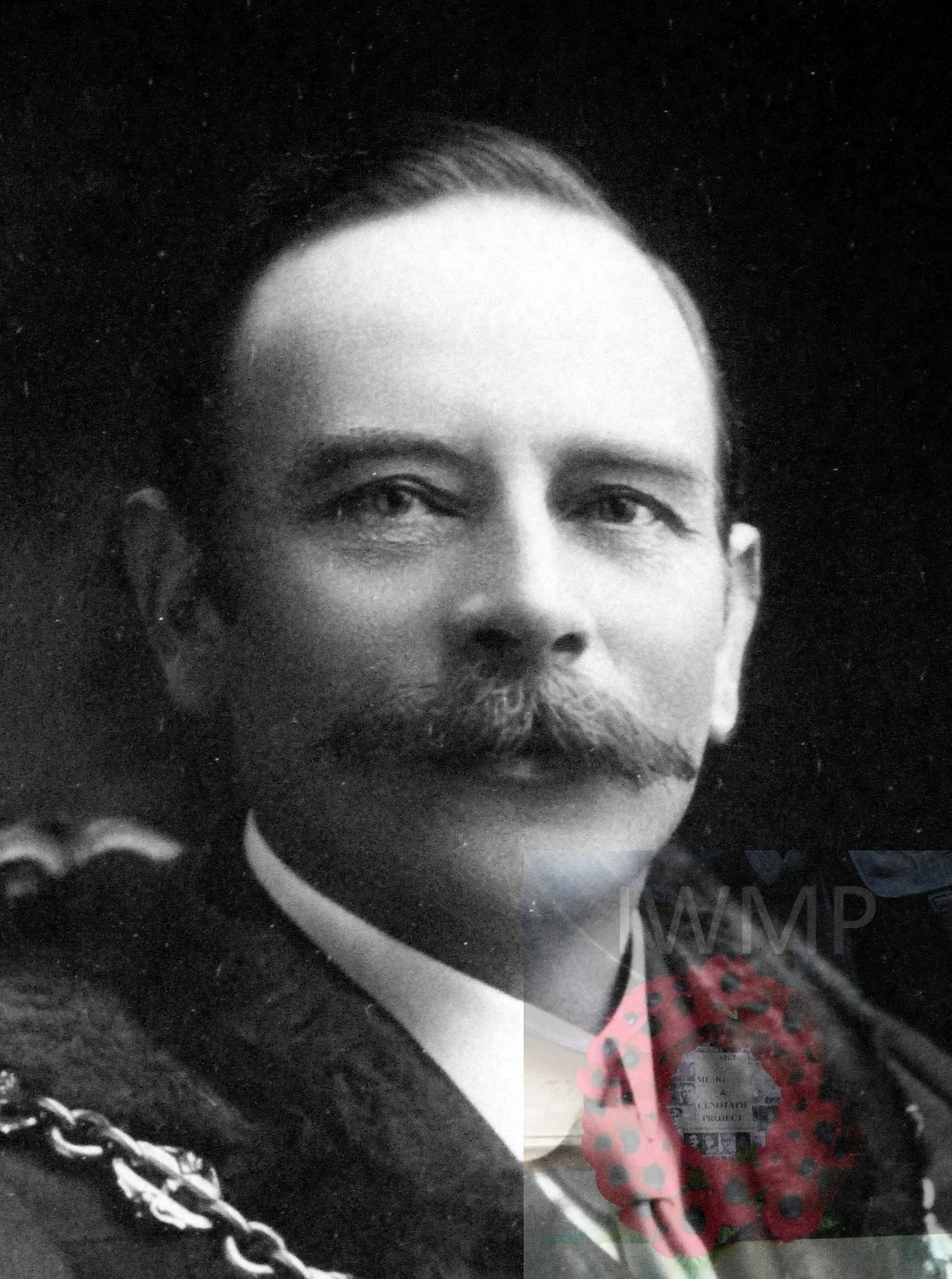
ALEXANDER GORDON BOSTOCK

Photograph courtesy of Janet Carolan – Dollar Academy
Born: 22nd February 1885, in a van at Saltmarket, Glasgow, Lanarkshire, Scotland.
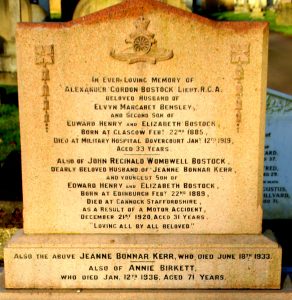
Died: 12th January 1919; age 33; died of Pneumonia and Influenza at the Dovercourt Military Hospital, Essex, the day he was due for demobilisation from the Royal Garrison Artillery.
Suffolk Chronicle and Mercury – Friday, 17th January 1919 – LIEUTENANT GORDON BOSTOCK, R.G.A. – We regret to announce the death on Sunday, in Hospital at Dovercourt, of Second Lieutenant Gordon Bostock, of the R.G.A., second son of Mr. and Mrs. Edward Henry Bostock, of Glasgow.
Mr. Gordon Bostock was originally studying for the medical profession, but was one of the 35 then in training at the Glasgow and Edinburgh Universities who gave up the profession in view of the coming of the National Insurance Act. This was in October 1911, when his brother was leaving the management of the Ipswich Hippodrome. Mr. Gordon Bostock took the position at Ipswich, and during his four years as manager her gained a large circle of friends by his genial manner.
In 1915, he joined the ranks of the R.G.A. and later obtained a commission in the same branch of the service. Practically the whole time, he has been engaged on coast defence work at the Beacon Hill Battery at Harwich.
Mr. Gordon Bostock, who was only 33 years of age, married on the 2nd September last, and the sympathy of his large circle of friends will go out to his widow and parents.
Chelmsford Chronicle – Friday, 17th January 1919 – Second Lieutenant Alexander Gordon Bostock, R.G.A., who died in hospital at Dovercourt on Sunday, joined the ranks of the R.G.A. and later obtained a commission. Practically the whole time, he had been engaged on coast defence work at the Beacon Hill Battery at Harwich. Mr. Gordon Bostock, who was 33 years of age, married on the 2nd September last. He belonged to Glasgow and had acted as manager of Ipswich Hippodrome. The funeral took place at Ipswich yesterday.
Daily Record – Monday, 13th January 1919 – MR. BOSTOCK LOSES A SON – The death took place yesterday at Dovercourt, Essex, from pneumonia, of Second Lieutenant Alexander Gordon Bostock, R.G.A., second son of Mr. Edward Henry Bostock, of 5, Burnbank Terrace, Glasgow.
Previous to entering the Army at the outbreak of hostilities, Mr. Gordon Bostock was a medical student at Glasgow University. He was only recently married to Elvyn Bensley, of Kingsway, Harwich, and was home on leave ten days ago.
Residence: Ipswich Hippodrome, Silent Street, Ipswich.
Occupation: Manager of Ipswich Hippodrome, Silent Street.
Enlisted as a Gunner with the Royal Garrison Artillery – 15th May 1916.
Commissioned: 7th September 1916 – Essex & Suffolk Regiment, Royal Garrison Artillery.
Promoted: Second Lieutenant – 1st February 1917.
Service: engaged in coast defence work at Beacon Hill Battery, at Harwich, Essex.
Rank: Lieutenant.
Regiment: Royal Garrison Artillery.
Laid to rest Thursday, 16th January 1919.
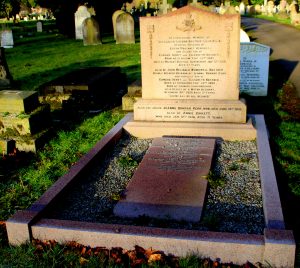
Grave Reference:
H.7.135.
Ipswich.
CENSUS
1891 67, Palatine Road, Stoke Newington, North London.
Alexander was 6 years old and living with his mother, Elizabeth & siblings Arthur & Violet, at the home of his widowed paternal grandmother. An aunt, cousins and father’s cousin were also staying at the home.
Emma Bostock, 56, born Cressing, Essex.
Fanny W. Bostock, 16, born Scotland.
Julia Bostock, 28, born Trowbridge, Wiltshire.
Elizabeth Bostock (nee Bostock), 31, born Leek, Staffordshire.
Gordon Bostock, 6, born Islington, London.
Arthur Douglas Fairgrieve, 4, born Scotland.
Violet Hilda Bostock, 3 months, Colinton, Edinburgh, Scotland.
Claud William Bostock, 3 months, born Stoke Newington, North London.
Harriet Maud Prosford, 30, born Tolleshurst Knights, Essex.
1901 Institution Place, Dollar, Clackmannanshire, Scotland.
Alexander was 16 years old, a Student and boarder at the academy.
Alexander was educated at Dollar Institution from 9th January 1901 until 1904. He boarded with the Rector, Dr Thom. Alexander, and won awards for French, Gymnastics & Drawing. His two brothers also attended the Dollar Academy.
Alexander studied medicine at Glasgow University, but gave it up to join in the management of his father’s businesses. He was in charge of the Hippodrome at Ipswich.
Alexander’s father was Henry Edward Bostock, born October 1858, Stony Stratford, Buckinghamshire – died September 1940, Glasgow, Lanarkshire, Scotland. Henry’s life was spent organising and touring with his menageries in Britain, Europe and the East, with the assistance of his sons, and in promoting and managing circuses, theatres, and cinemas. His ventures in Glasgow, Ipswich, and London were of special importance. He wrote a book, “Menageries, Circuses and Theatres“, published in 1927. He also owned Hippodromes in Paisley, Hamilton, Motherwell, Wishaw and Greenock in Strathclyde, and a cinema at Blantyre, Strathclyde. A member of Glasgow City Council 1908 – 1911, and in 1917 was elected a J.P. He was a Rotarian, a philanthropist, and a devout churchman, as well as being a Fellow of the Zoological Society. Bostock Road, Ipswich, commemorates his association with the town.
On the 2nd September 1918, at All Saints Church, Dovercourt, Essex, 33 year old Alexander married 19 year old Elwyn Margaret Bensley, born 1899, Ipswich – daughter of Walter Charles Bensley, a master grocer – own account, and Emma Sophia Bensley (nee Potter), an assistant in the business, of Hordle Street, Dovercourt, Essex.
Probate to Edward Henry Bostock – father, Hippodrome Proprietor.
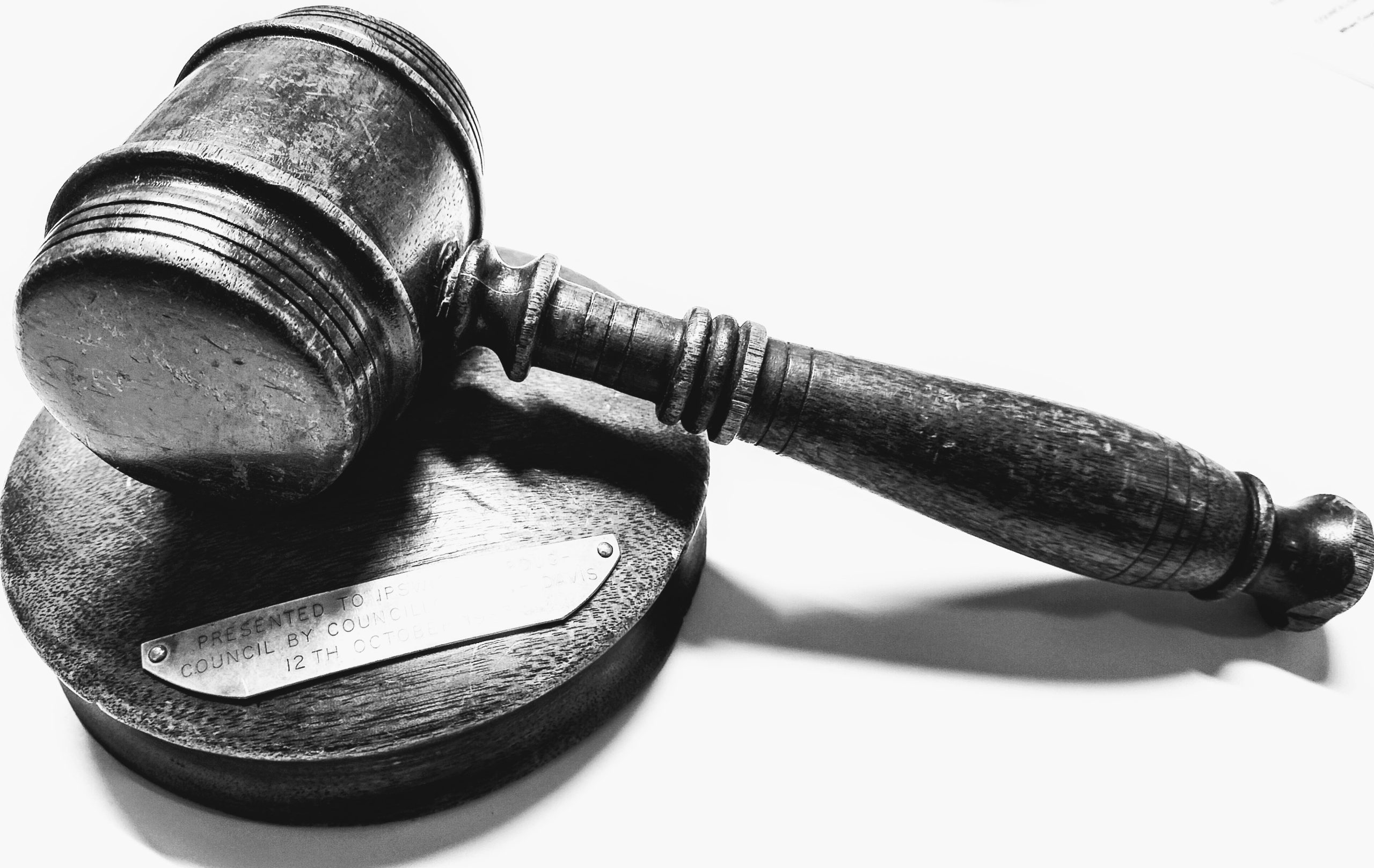
 Suffolk Chronicle and Mercury – Friday, 6th February 1914 – CHARGE AGAINST MOTOR-CYCLIST – At the Ipswich Police Court, on Monday, 2nd FebruaryGordon Alexander Bostock, music hall manager, Silent Street, was before the Mayor of Ipswich, Mr. William Pipe, Messrs. Henry Mason Jackaman, Frederick Edward Rands, William Harry Calver, and Major George William Horsfield, charged with being drunk whilst in charge of a motor-cycle early last Friday morning. The Defendant was not present, bur Mr. W. Marshall appeared on his behalf.
Police-constable E. Parker said at 12:30 on Friday morning, he was in Orwell Place when he saw the defendant lying on a motorcycle. Going up to him, the witness saw he was the worse for drink. With the assistance of Police-constable Cook, the witness took the defendant to the Police Station for his own sake, and he was seen by a doctor.
Mr. W. Marshall handed in a certificate from Dr. Hoyland. He said that the defendant had suffered from influenza, followed by cranial neuralgia, and he was taking medicine and was subject to attacks of vertigo. Dr. Hoyland also wrote that on Thursday, the defendant took a double dose of anodyne, and that would make him stupid and listless. The doctor added that he wrote that explanation in justice to Mr. Bostock.
Mr. Marshall, in reply to the Bench, said he pleaded Guilty on behalf of his client, who he understood was still in bed. He had taken all this medicine, and he also had a drink on the night in question. The Bench fined Defendant 40s., and 7s. 6d. cost.
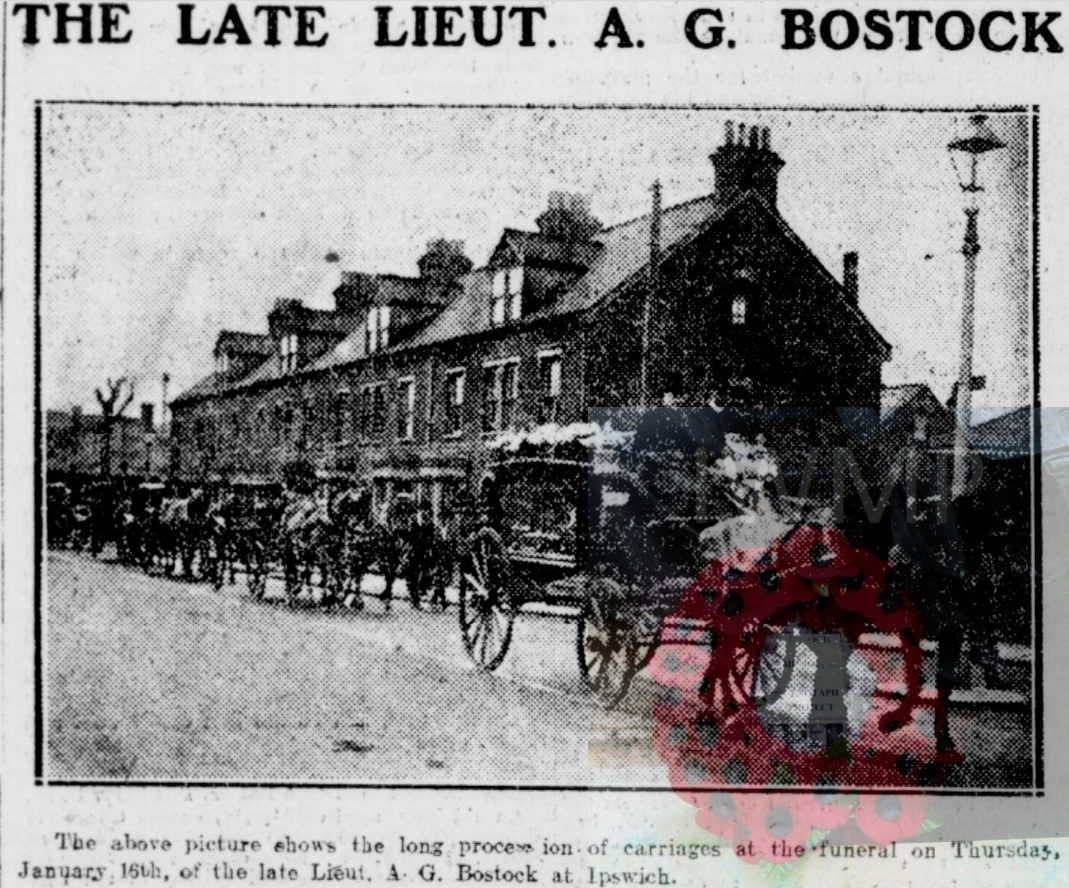
Suffolk Chronicle and Mercury – Friday, 17th January 1919 – LIEUTENANT GORDON BOSTOCK – FUNERAL SCENES AT HARWICH AND IPSWICH – The funeral of the late Lieutenant Gordon Bostock, R.G.A., whose death occurred last Sunday from pneumonia, took place at Ipswich today. The body was removed from the Military Hospital at Dovercourt to the waiting carriage that was affixed to the 10 a.m. train for Ipswich from Harwich, the deceased officer being accorded a full military funeral to the station.
The coffin, covered with the Union Jack, on which rested the deceased’s cap and sword and a beautiful wreath from the young widow, was placed on the gun-carriage, which was headed by the band of the Norfolk regiment playing Chopin’s “Funeral March.”
Six of the brother officers of the deceased acted as pallbearers, and following the cortege were officers and men from the Garrison.
The deceased’s widow, his father, and mother-in-law followed in a cab behind the military procession. There was much evidence of respect manifested en route to the station, which was by way of the Marine Parade and Kingsway.
IPSWICH CEMETERY
The train arrived at Ipswich shortly before noon and was met by a number of friends and the members of the staff of the Hippodrome. The funeral cortege then proceeded to the Cemetery, where the service was conducted by the Reverend S. Green, Rural Dean, vicar of St. Nicholas’ Church, the first portion being taken in the church. The coffin was of polished oak with brass fittings. There was a large number of beautiful floral tributes.
The funeral arrangements were carried out by Edward S. Singleton, Ltd., Ipswich.
Royal Garrison Artillery: http://Royal Garrison Artillery
Leave a Reply